


July 21, 2026
Why Am I Still Losing Hair If My DHT Is Low? What the Research Actually Says
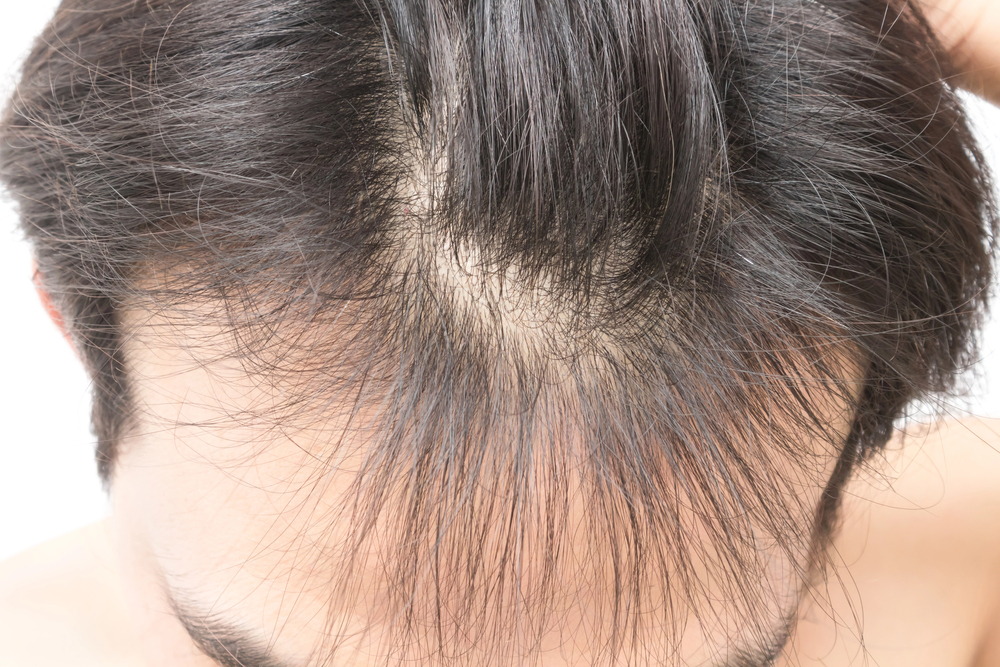
If you've been on finasteride or dutasteride for years, gotten a blood test, and found your DHT is genuinely low yet you're still shedding, you've run into one of the most confusing corners of hair loss treatment. It feels like it should be simple: lower the hormone that causes the damage, stop the damage. So why doesn't it always work that way? The short answer is that a standard blood test isn't measuring the DHT that actually matters to your hair. Here's what's really going on.
The Blood Test Is Measuring the Wrong DHT
When you get DHT checked through a standard blood panel, you're measuring serum DHT, the hormone circulating through your bloodstream. That number is useful for a lot of things, but it's a poor proxy for what's happening at your scalp.
Hair follicles don't just respond to whatever DHT happens to be passing through the blood. The enzyme that converts testosterone into DHT, called 5-alpha-reductase, is active locally in the tissue around your hair follicles. According to a clinical reference from the National Institutes of Health, type II 5-alpha reductase is concentrated in the outer root sheaths of hair follicles themselves, meaning a meaningful share of the DHT affecting your hair is produced right there in the scalp, largely independent of what's circulating in your blood. A low serum number doesn't guarantee a low local number.
Medication Lowers DHT — But Not to Zero, and Not Evenly
The other piece people miss: even a "working" medication doesn't eliminate DHT, and different drugs don't lower it by the same amount. Finasteride blocks the type II and III forms of 5-alpha-reductase and reduces serum DHT by roughly 70%, while dutasteride blocks all three isoenzyme types and can reduce serum DHT by up to about 99% at typical doses. Both numbers describe blood levels, neither is a direct readout of what's left over at the follicle.
This matters because follicle sensitivity, not just DHT quantity, drives androgenetic alopecia. Two people with identical serum DHT levels can have completely different outcomes depending on how sensitive their androgen receptors are. If your follicles are highly sensitive, even the DHT that survives a 70–90% reduction can be enough to keep driving miniaturization. That's not a sign your medication "isn't working" in the way most people assume, it's a sign that DHT quantity was never the whole story for your particular hair.
Other Conditions Can Look Exactly Like DHT-Driven Loss
Androgenetic alopecia isn't the only explanation for ongoing shedding, and a low DHT result is actually a useful clue that something else might be contributing. Conditions worth ruling out with a doctor include:
Thyroid dysfunction. Both hypothyroidism and hyperthyroidism are well-documented causes of diffuse hair thinning that can occur independently of androgens.
Iron and ferritin deficiency. Low ferritin, even without full-blown anemia, is a recognized contributor to hair shedding, particularly in women but also in men.
Telogen effluvium. A stressful event, illness, major weight change, surgery, or significant emotional stress can push a large share of hairs into the shedding phase two to three months later, independent of any hormonal cause.
Nutritional gaps. Vitamin D, zinc, and B12 deficiencies have all been associated with hair thinning in the clinical literature.
Scarring alopecias. Conditions like lichen planopilaris can mimic diffuse androgenetic thinning and require a scalp biopsy to distinguish.
None of these show up on a DHT panel, which is exactly why "my DHT is low but I'm still losing hair" so often turns into an unresolved back-and-forth rather than a clean answer — the question itself is really several different questions bundled into one.
So What Should You Actually Do With This Information?
If you're in this situation, a few concrete next steps tend to be more productive than adjusting your medication dose on your own:
Ask what kind of DHT was actually tested. Standard panels measure serum DHT. If your provider hasn't discussed the distinction between systemic and local hormone activity, that's worth raising directly.
Rule out the non-hormonal causes. A basic panel covering thyroid function, ferritin, and vitamin D can eliminate or confirm several of the most common overlapping causes before you assume treatment failure.
Get an in-person evaluation of your pattern. A trichologist or hair restoration specialist can examine whether your thinning follows a classic androgenetic pattern (temples, crown, vertex) or a more diffuse pattern that points toward a different cause.
Give it real time before judging. Even in patients who respond well, finasteride's effect on hair count is typically assessed over a 12-month window, not weeks or a few months.
The Bigger Picture
"My DHT is low, but I'm still losing hair" isn't a contradiction it's a sign that hair loss is being driven by more than one variable, and that blood DHT alone was never going to capture the full picture. Between local follicle production, individual receptor sensitivity, and the list of non-hormonal conditions that mimic androgenetic alopecia, there's usually a real explanation. Finding it just requires looking past the number on the lab report.
If you've hit this wall — doing everything right on paper but still not seeing the results you expected it's usually worth a hands-on evaluation rather than more guesswork. Hair Restoration Institute of Minnesota offers a free consultation to look at your specific pattern, history, and options, whether that means adjusting your prevention plan or exploring other treatments tailored to what's actually driving your case. Learn more at www.HRIMN.com.
