


July 17, 2026
My Hair Transplant Still Looks Thin at 7 Months - Did It Fail, or Does It Just Need More Time?
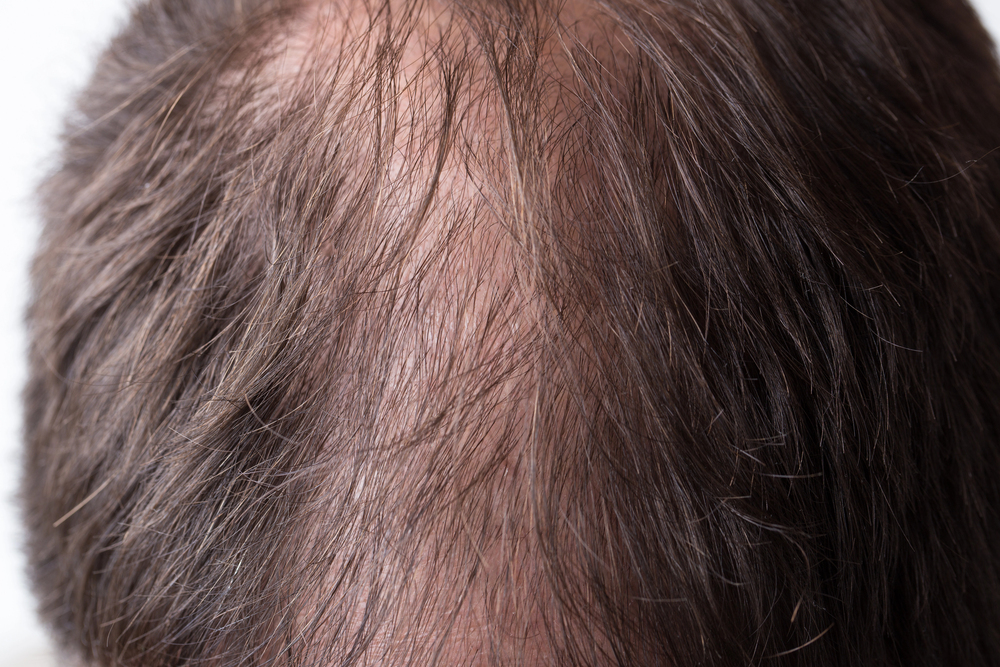
Somewhere between month five and month eight after a hair transplant, a lot of patients hit the same wall: the initial "wow, I have hair again" feeling from right after surgery has faded, the scalp doesn't look nearly as full as it did those first couple weeks, and the growth that's supposed to be coming in just isn't there yet. It's one of the most common sources of panic in the hair restoration world, and it's a genuinely hard question to answer from a photo alone. Here's how to actually think about it.
Why the Scalp Looks Worse Before It Looks Better
The timeline confuses almost everyone, mostly because the first two weeks are misleading. Immediately after surgery, the scalp looks deceptively full — every transplanted graft is still visibly in place, even though the hair shaft attached to it hasn't actually started producing new growth yet.
Then comes shock loss. Within two to four weeks, most transplanted hair shafts shed. This is expected and is a normal response to the trauma of extraction and implantation, not a sign the graft has died — the follicle underneath typically survives and re-enters an active growth phase around day 60, reaching full growth activity by roughly day 90. Native hair surrounding the transplant can also shed temporarily due to the surgical trauma nearby, a related but separate phenomenon that usually resolves as the scalp heals.
This is exactly why the scalp can look fuller at week two than it does at month five: the grafts haven't shed yet at week two, and by month five they have shed and are only partway through regrowing.
The Real Timeline for Judging Results
Visible new growth typically starts appearing around month three, and most patients see meaningful density by month six to seven — but "meaningful" is not the same as "final." Results generally continue to fill in through month nine to twelve, with the twelve-month mark widely used as the reference point for a stable, close-to-final outcome. Crown and vertex areas tend to run even later than the hairline and mid-scalp, sometimes not reaching full maturity until 15 months or beyond.
That means a scalp that looks disappointing at month seven is, statistically, still mid-process for a large share of patients — not necessarily a failed result. The clinical guidance is consistent on this point: evaluating a transplant's success before month nine or ten is premature for most patients, and it takes the full year to know for certain.
When It's Reasonable to Actually Worry
None of this means every slow-looking result is fine — there are legitimate reasons a transplant can underperform, and it's worth understanding them rather than just being told to "wait and see" indefinitely:
Graft survival during the procedure itself. Grafts spend time outside the body between extraction and placement, and how they're handled during that window affects how many survive. Minimizing time outside the body, preventing desiccation, and avoiding trauma during placement all measurably affect graft survival — this is one of the reasons technique and clinic experience matter as much as graft count.
Insufficient graft count for the area treated. A large-looking number of grafts can still be spread too thin if the balding area is large relative to the graft count, producing a result that looks less dense than expected even with excellent graft survival.
Skipping DHT-blocking medication. Transplanted hair is more resistant to DHT than native hair, but "resistant" isn't the same as "immune," particularly with FUE procedures that draw from a wider donor area than the narrowest DHT-resistant band. Native hair around the transplant is also still vulnerable to ongoing loss without a 5-alpha reductase inhibitor, which can make an otherwise successful transplant look thinner over time as surrounding native hair continues to recede.
An underlying condition unrelated to the transplant. Thyroid issues, iron deficiency, and stress-related telogen effluvium can all suppress growth or cause additional shedding independent of the transplant itself, and are worth ruling out with a doctor if progress seems unusually slow.
What Actually Helps While You Wait
Take dated photos in consistent lighting every few weeks. Month-to-month comparisons are far more informative than comparing today to your expectations.
Confirm your post-op medication plan with your clinic, especially if you skipped finasteride or minoxidil due to side-effect concerns — there are often alternative delivery methods worth discussing rather than going without any DHT-blocking support at all.
Ask your surgeon directly about graft count relative to the area treated, since "how many grafts" only tells part of the story without knowing the size of the area they were meant to cover.
Resist the urge to make a final judgment before month nine or ten. It's the single most common mistake in these situations, and it's an understandable one — waiting a year for a result you've already paid for is genuinely hard.
The Bottom Line
A hair transplant that looks thin at seven months is unsettling, but it's also, for most patients, simply unfinished. The distinction between "still growing" and "failed" almost always comes down to time, medication adherence, and an honest look at graft count versus treatment area — not something that can be reliably diagnosed from a photo on a forum. If real concern remains once you're closer to the one-year mark, that's the right time for an in-person evaluation rather than more guessing.
If you're navigating this uncertainty yourself, Hair Restoration Institute of Minnesota offers a free consultation to review your case directly — timeline, technique, and what's realistic for your specific donor supply — rather than leaving you to interpret your own photos. Learn more at www.HRIMN.com.
