


February 16, 2026
Where Does Hair Loss Usually Start and What Can You Do About It
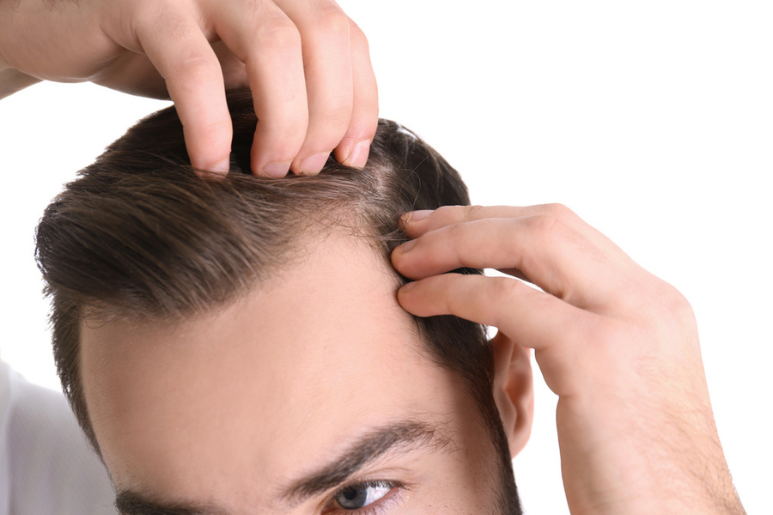
Hair loss rarely happens all at once. For most people, it begins subtly. You may notice your edges looking thinner, your part appearing wider, or your hairline slowly shifting back. These early changes can feel alarming, but they are also an important opportunity. When hair loss is identified early, there are more options available to preserve and restore your hair.
At Hair Restoration Institute in Minnesota, we work with both men and women to identify where hair loss is starting, understand why it is happening, and create a personalized plan using advanced services like PRP hair restoration, laser hair therapy, NeoGraft hair restoration, and scalp micropigmentation.
Thinning Edges and Receding Hairlines
One of the most common places we see hair loss first is along the hairline and edges. For men, this often shows up as a receding hairline at the temples. For women, it can appear as thinning around the edges or a less defined hairline.
In men, this pattern is typically linked to hereditary hair loss. Hormones and genetics cause certain follicles to gradually shrink over time. The hair becomes finer and shorter until growth eventually stops.
In women, thinning edges can be caused by genetics, hormonal shifts, or traction from tight hairstyles. Styles that consistently pull on the hairline, such as tight braids or ponytails, can stress follicles and lead to gradual thinning along the perimeter.
We evaluate the health of the follicles in these areas to determine whether they are miniaturized but still active or if they have stopped producing hair. This distinction helps us recommend the most effective solution.
Widening Part and Diffuse Thinning
Another early sign of hair loss, especially in women, is a widening part. You may notice more scalp showing when you style your hair, even though your hairline looks relatively unchanged.
This type of hair loss is often diffuse, meaning it occurs across the top of the scalp rather than in one specific spot. Hormonal changes, stress, and genetics can all contribute. For men, diffuse thinning can also occur across the crown before becoming more noticeable.
When follicles are still alive but weakened, non-surgical options like PRP hair restoration and laser hair therapy can be highly effective. PRP hair restoration uses your own growth factors to stimulate and support struggling follicles. Laser hair therapy increases blood flow and encourages healthier hair growth over time. These treatments are especially beneficial when started early.
Thinning at the Crown
For many men, the crown is one of the first areas to show noticeable thinning. You may not see it yourself at first, but it becomes apparent in photos or under bright lighting. Over time, the thinning area can expand if left untreated.
The crown is particularly sensitive to hereditary hair loss. As follicles shrink, hair becomes finer, and coverage decreases. Early intervention with PRP hair restoration or laser hair therapy may help maintain density. However, if the area has significant loss and follicles are no longer producing hair, NeoGraft hair restoration can provide a long-term solution.
NeoGraft hair restoration involves transplanting healthy follicles from a donor area, typically the back of the scalp, to thinning or balding areas like the crown. Because these transplanted follicles are resistant to hair loss, they continue to grow naturally in their new location.
Why Early Treatment Matters
Hair loss is progressive in many cases. Waiting until thinning becomes severe can limit your options. When follicles are completely inactive, stimulation treatments may not be effective. That is why early evaluation is so important.
At Hair Restoration Institute, we take a comprehensive approach to assessing your hair and scalp. By identifying where hair loss is starting and understanding the underlying cause, we can recommend the right combination of services for your goals.
For patients in the early stages, PRP hair restoration and laser hair therapy can help strengthen existing hair and potentially slow further loss. For those with more advanced thinning or clearly defined bald areas, NeoGraft hair restoration offers natural-looking, permanent results. Scalp micropigmentation can also enhance the appearance of density by creating the look of fuller hair in thinning areas.
Restoring More Than Just Hair
Hair loss can affect more than your appearance. It can impact your confidence and how you feel in social and professional settings. Many patients tell us they start styling their hair differently, avoiding certain lighting, or feeling self-conscious in photos.
The good news is that you do not have to accept early thinning as inevitable. Modern hair restoration offers proven, customized solutions. Whether you are noticing thinning edges, a widening part, or changes at the crown, there are options available.
At Hair Restoration Institute, our goal is to create a plan that fits your stage of hair loss and your long-term vision. Some patients benefit from starting with non-surgical treatments to preserve what they have. Others are ready to restore density with NeoGraft hair restoration. In many cases, a combination approach delivers the best outcome.
Take the First Step
If you are seeing early signs of hair loss, now is the time to act. The sooner you understand what is happening, the more control you have over the outcome. Hair loss may begin subtly, but with the right expertise and treatment plan, you can take meaningful steps toward fuller, healthier-looking hair.
Call the Hair Restoration Institute at 612-588-HAIR (4247) today to schedule your free consultation with one of our caring hair loss professionals. We will evaluate your hair loss and create a customized plan to give you a healthy, vibrant head of hair again. We are located at 8009 34th Avenue S, Suite #1225, Bloomington, Minnesota 55425.
