


July 02, 2026
Does Exosome Therapy Actually Work for Hair Loss? What the Evidence Shows
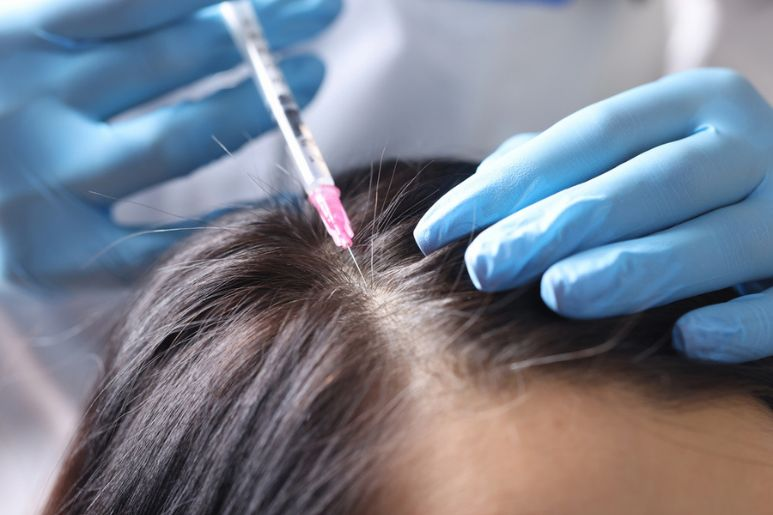
A viral burn-recovery case reignited an old question: if exosomes work this well for skin, why are hair loss results so inconsistent?
A widely shared story about a burn patient's remarkable skin recovery using exosome therapy recently made the rounds — and it prompted an honest question from someone in the hair loss community who had tried the same treatment for hair loss “with little luck.” It's a fair question, and one that deserves a real answer instead of a shrug.
What Exosomes Actually Are
Exosomes are tiny extracellular vesicles that cells use to communicate — they carry growth factors, proteins, and signaling molecules that tell nearby cells how to behave. In aesthetic and regenerative medicine, exosomes are typically derived from stem cells (often umbilical cord tissue) and injected to stimulate tissue repair and cell activity.
Why They Shine in Skin and Wound Healing
Skin regeneration is, biologically speaking, a more uniform process: a relatively small number of cell types need to be told to proliferate, migrate, and rebuild tissue structure. The feedback loop is also fast and visible — you can watch a wound close over weeks. That combination makes skin and wound applications one of the clearer, most demonstrable use cases for exosome therapy.
Why Hair Follicles Are a Harder Problem
Hair follicles are a fundamentally more complex target. Each follicle cycles through distinct growth phases (anagen, catagen, telogen), involves multiple cell types working in coordination, and in androgenetic alopecia, the problem usually isn't damaged tissue that needs repair — it's miniaturized follicles that need to be reactivated into a full growth cycle. That's a different biological task than closing a wound, and it's a big part of why results for hair are more variable than results for skin.
What the Current Evidence Actually Supports
Exosome therapy shows real promise as an adjunct treatment for early-to-moderate thinning — particularly for reactivating dormant follicles and thickening existing hair — but it is not currently supported as a standalone cure for advanced balding. Results vary significantly based on two factors that rarely get discussed in casual online comparisons:
Product concentration and sourcing. Exosome products vary widely in purity and particle concentration. A diluted or poorly sourced product will simply underperform, regardless of the underlying science — and this is likely a real factor behind a lot of “it didn't work for me” reports online.
Candidate selection and protocol. Exosome therapy is generally best suited to earlier-stage thinning where follicles are miniaturized but not dormant, often used alongside PRP or growth factor treatment rather than in isolation.
A Reasonable Way to Evaluate It
Ask for the specific concentration (ml and particle count) of the product being used, not just the brand name. At HRIMN, we are proud to carry the EV Pure line of biologics from VittiLabs, a leader in exosome technology. These treatments contain 4.5ml of injectable biologics and 75 billion particles.
Ask whether it's being recommended as a standalone treatment or paired with PRP/growth factor therapy — be skeptical of any clinic positioning it as a one-time miracle fix for advanced baldness. At HRIMN, we recommend exosomes as an adjunct therapy to add to a hair transplant, especially in cases that are otherwise limited by available donor hair, where every single hair counts.
Set expectations around thickening and reactivating existing thinning hair, not regrowing hair in areas that are fully bald. At HRIMN, we include complimentary HairMetrix scalp scans with every treatment to provide an objective assessment of improvement in follicular units and the thickness of the treated follicles.
The Bottom Line
Exosome therapy isn't a myth, and it isn't magic — it's a legitimate but narrower tool than the skin-healing headlines suggest. The inconsistent results reported online usually trace back to product quality or mismatched expectations, not the underlying science being fake. Treated as an adjunct for the right candidate, with a transparently sourced product, it has a real place in a hair restoration plan.
Hair Restoration Institute of Minnesota offers exosome therapy with transparent, disclosed concentrations, typically paired with PRP or growth factor treatment for early-to-moderate thinning. A free consultation is available at www.HRIMN.com to see if you're a good candidate.
