


November 02, 2026
Can You Get a Hair Transplant If You Have Scarring Alopecia (LPP or FFA)?
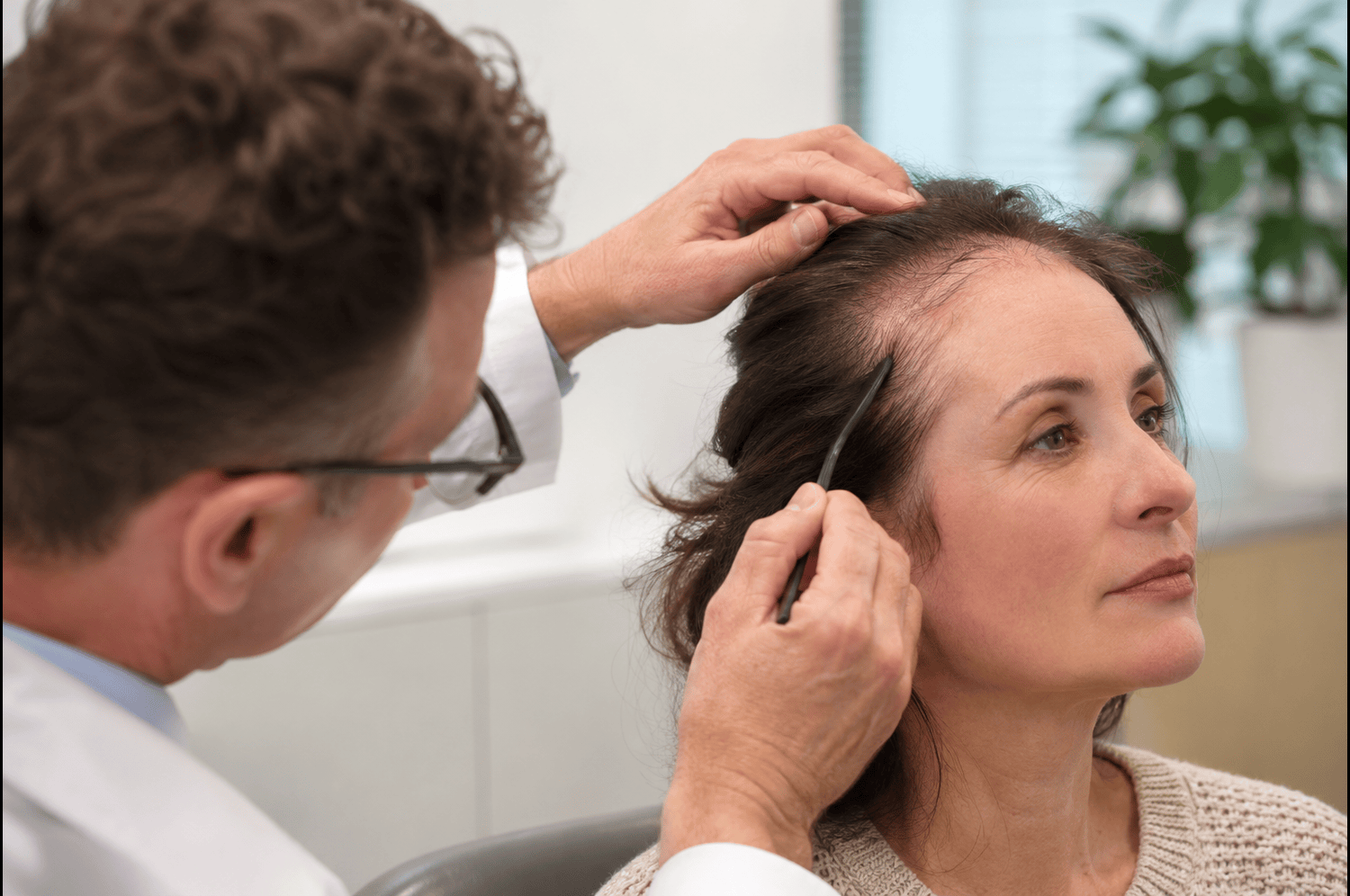
Why scarring hair loss is different
The kind of people that most people ask about online is androgenetic alopecia, the pattern baldness that runs in families. It thins follicles gradually, but the follicles are still there, and the permanent donor hair at the back and sides stays healthy. That is the whole reason a hair transplant works. But it isn’t the only kind of hair loss.
Scarring (cicatricial) alopecias such as lichen planopilaris (LPP) and frontal fibrosing alopecia (FFA) are a different problem. The immune system attacks the follicle itself, and the follicle is replaced by scar tissue. Once a follicle is scarred over, it does not come back on its own. The hair loss often shows up as a receding frontal hairline that marches back in unison (instead of the M-shape more typical in AGA), lost eyebrows, or patchy areas with redness, scaling or itching around the openings. Often it is mistaken for ordinary balding.
That distinction matters before anyone talks about surgery. A transplant moves healthy follicles; it does nothing to calm an inflammatory disease that is still active.
What the research says about transplants in LPP and FFA
The evidence is thin for using hair transplantation to reverse hair loss for LPP and FFA. It mostly comes from case reports and small case series. A systematic review in Skin Appendage Disorders pooled 15 reports covering 34 patients. Most had moderate to positive results, but a meaningful minority had poor results or a recurrence of the disease. For LPP, results leaned positive, with good or moderate graft survival in most reported patients. For FFA, many reported transplants did poorly over time, with disease returning in grafted areas within a few years in several cases.
Two cautions apply to those numbers. First, follow-up in these reports is inconsistent, so a good result at one year does not guarantee the same result at five. Second, successes are more likely to be published than failures, so the true picture may be less favorable than the literature suggests. A more recent systematic review on the same question on PubMed, shows researchers are still revisiting the data. This is why these cases are so difficult to treat.
The "wait until it is quiet" rule
Almost every source agrees on one principle: the disease should be inactive before surgery. The commonly quoted figure is about two years of stability, although that is the guideline that we use at HRI and come patients may need more time, particularly with FFA. In practice, a careful surgeon will want a dermatologist to confirm the disease is quiet, will often want a scalp biopsy or close examination of the follicle openings, and will usually recommend continuing anti-inflammatory treatment before and after surgery.
Questions worth asking before you book
Who has confirmed my diagnosis, and was a biopsy done? Treating scarring alopecia as pattern baldness is the most common and costly mistake.
How long has my disease been stable, and how is that being measured?
Is a small test area an option? Many surgeons will transplant a limited number of grafts first and wait to see how they grow and hold.
What is the plan if the disease flares after surgery, and what happens to the grafts?
How many cases like mine has this surgeon actually treated, with long-term photos?
Are there other options if surgery is too risky?
Yes. When the disease is active, or when a surgeon decides the risk of graft loss is too high, non-surgical camouflage can still restore a sense of density. Scalp micropigmentation and hair systems do not depend on follicle survival, although both should be evaluated by a dermatologist when the scalp is inflamed or sensitive.
A new drug for LPP is in testing
Until now there has been no FDA-approved systemic treatment for LPP; dermatologists rely on a range of off-label anti-inflammatory drugs. In October 2026, New Beauty reported that a phase 2/3 trial of brepocitinib, an oral JAK inhibitor, is being run in moderate to severe LPP. No results have been released, so it is far too early to say whether it works. Oral JAK inhibitors also carry boxed safety warnings, which is why they are studied carefully. If it succeeds, it could give patients a better way to get the disease quiet, which is exactly the precondition for considering surgery.
The bottom line
A transplant is not automatically off the table with LPP, and the odds look better for LPP than for FFA, but outcomes are less predictable than in routine pattern baldness and depend heavily on how well the disease is controlled. Get the diagnosis confirmed, get the inflammation quiet, and look for a surgeon who is comfortable saying "not yet" or "start small."
If you want a second opinion on whether your hair loss is pattern baldness or something else, HRIMN offers a free consultation at www.HRIMN.com.
