


March 04, 2026
What is Tumescent Anesthesia? The Secret to a Cleaner, Safer Transplant
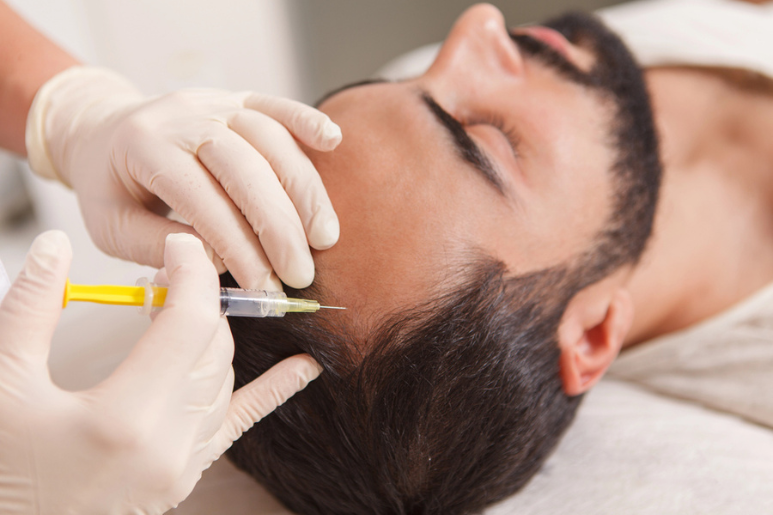

Why "Swollen" is a Good Thing in Hair Surgery
If you have been reading about hair transplants, you might have stumbled across a technical term: Tumescent Anesthesia. It sounds intimidating, but it is actually one of the most important tools we use at HRI to ensure your comfort and the survival of your new hair grafts.
"Tumescent" essentially means "swollen and firm." Originally developed for liposuction, this technique involves injecting a large volume of very dilute anesthetic solution into the fatty layer of the scalp.
Why do we do this? It’s not just about numbing you. It serves three critical functions that improve your results.
1. It Protects Your Nerves and Blood Vessels
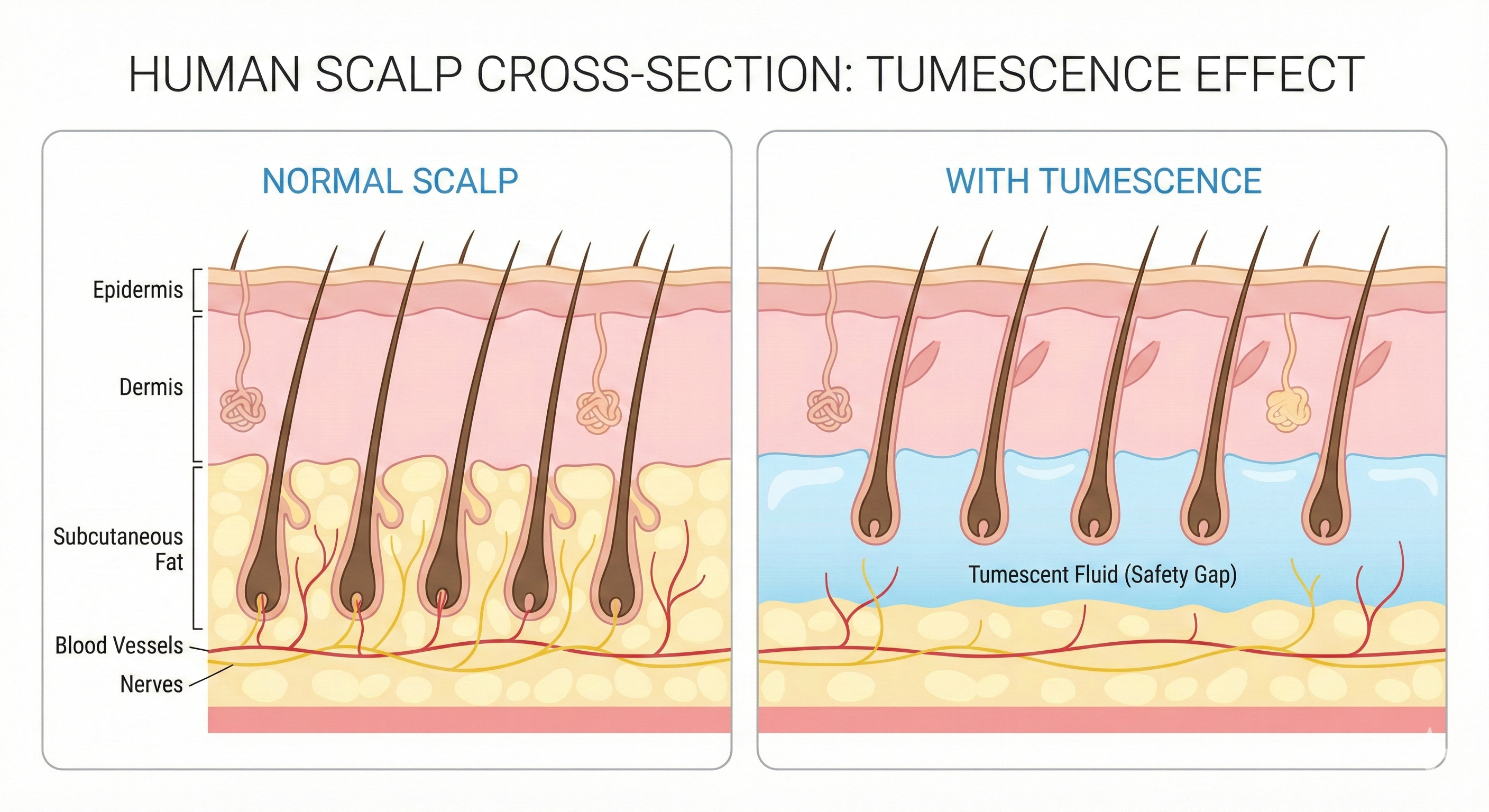
The scalp is thin, and critical nerves and blood vessels lie just beneath the surface. By injecting tumescent fluid, we physically "lift" the skin.
The Safety Gap: This fluid increases the distance between the hair follicles (which sit in the upper fat) and the larger nerves and vessels (which lie deeper).
The Result: This creates a safety buffer, significantly reducing the chance of injury to these deeper structures during the harvest.
2. It Improves Graft Quality
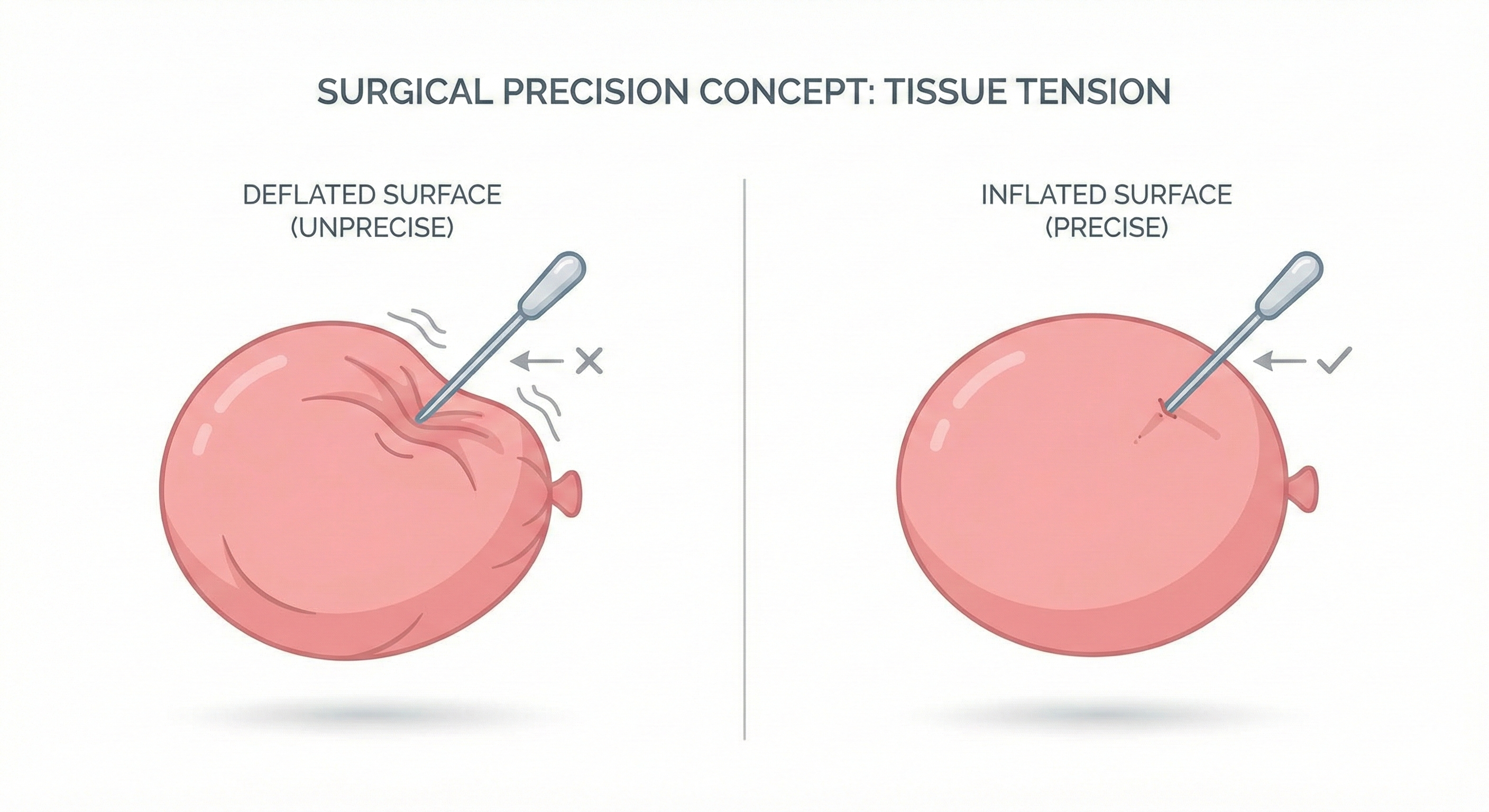
Have you ever tried to slice a soft tomato vs a firm apple? It’s difficult to get a clean cut. The same applies to the scalp.
Rigidity: The fluid makes the donor area rigid and firm.
Precision: This firmness allows us to extract follicles with extreme precision, decreasing "transection" (accidental damage to the hair bulb). Better extraction means more viable hairs for your new hairline.
3. It Reduces Bleeding and Pain
The solution we use typically contains a mixture of Lidocaine (numbing agent) and Epinephrine (adrenaline).
Less Bleeding: The epinephrine constricts small blood vessels, and the mechanical pressure of the fluid itself further limits bleeding. This gives us a "clean field" to work in, which is vital for placing tiny grafts accurately.
Prolonged Comfort: Because the solution is dilute and widespread, it produces uniform anesthesia that lasts longer.
Bonus: The "Long-Acting" Finish
We don't just stop at Lidocaine. To ensure you remain comfortable even after you leave our clinic, we often use a long-acting anesthetic called Bupivacaine or Ropivacaine.
The "Booster": We may inject this at the end of the surgery, specifically along the suture line or extraction area.
The Benefit: While Lidocaine wears off in 1–2 hours, Bupivacaine is more potent and offers a much longer duration of pain relief, bridging the gap until you are resting comfortably at home.
At HRI, we believe that a great hair transplant isn't just about where the hair goes—it's about how we treat the scalp it comes from. Tumescent anesthesia is just one of the medical protocols we use to ensure your safety and comfort are never compromised.
Ready to restore your hair with a team that prioritizes medical safety? Schedule your free consultation online and speak with one of our hair professionals.
