


May 06, 2026
GLP-1 Hair Loss: Why It Happens and How HRI’s Regenerative Hair Recovery Protocol Can Help
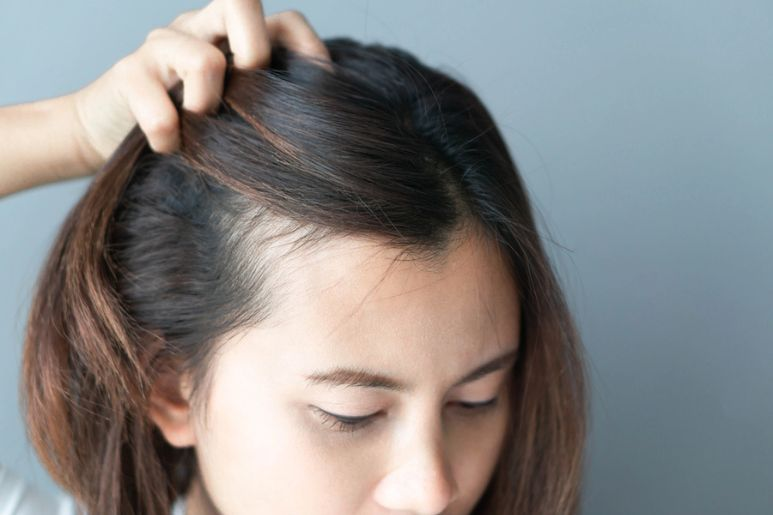
Losing weight on Ozempic, Wegovy, Mounjaro, Zepbound, or another GLP-1 medication can be life-changing. But for many patients, the excitement of weight loss is followed by an alarming surprise: sudden hair shedding.
If you are seeing more hair in the shower, on your pillow, in your brush, or around your hairline after starting a GLP-1 medication, you are not alone. Hair shedding after rapid weight loss is increasingly common, and it can be especially frustrating because it often appears two to four months after the weight loss begins—right when you may otherwise be feeling better about your health.
At the Hair Restoration Institute of Minnesota, we can help patients determine whether their GLP-1-related hair loss is temporary shedding, early genetic thinning, nutritional hair loss, or a combination. More importantly, we help patients act early with a personalized treatment plan that may include PRP hair restoration, Growth Factors, Exosomes, and, when appropriate, surgical hair restoration.
For many GLP-1 patients, the goal is simple:
Stop the shedding. Strengthen the follicles. Recover density. Protect long-term hair.
What Are GLP-1 Medications?
GLP-1 receptor agonists are medications that mimic the body’s natural glucagon-like peptide-1 hormone. They help regulate blood sugar, slow stomach emptying, increase fullness, and reduce appetite. These effects can lead to substantial weight loss, especially when the medication is used at obesity-treatment doses. Tirzepatide is technically a dual GIP/GLP-1 receptor agonist, but patients and clinicians often group it with GLP-1 weight loss medications because it produces similar appetite and weight-loss effects.
Common medications people associate with GLP-1 weight loss include:
Semaglutide: Ozempic, Wegovy
Tirzepatide: Mounjaro, Zepbound
Liraglutide: Saxenda, Victoza
Dulaglutide: Trulicity
The hair-loss conversation is especially common with higher-dose weight loss formulations such as Wegovy and Zepbound, because greater and faster weight loss increases the likelihood of shedding.

Can GLP-1 Medications Cause Hair Loss?
Yes, hair shedding can occur during GLP-1 weight loss treatment. Hair loss is listed in the prescribing information for both Wegovy and Zepbound. In Wegovy adult clinical trial data, hair loss was reported 3.3x more often in patients taking Wegovy 2.4 mg compared with placebo patients. The prescribing information states that hair-loss adverse reactions were associated with weight reduction. Zepbound’s prescribing information also reports hair loss more often in treated patients than placebo patients and similarly notes that these reactions were associated with weight reduction.
That distinction matters.
In most patients, GLP-1 medications are not directly destroying hair follicles. Instead, hair shedding usually happens because the body is reacting to rapid weight loss, reduced calorie intake, inadequate protein, nutritional deficiencies, hormonal shifts, or metabolic stress.
The medical term for this type of shedding is telogen effluvium.
The Main Cause of GLP-1 Hair Loss: Telogen Effluvium
Telogen effluvium is a temporary shedding condition that happens when a physical stressor pushes more hair follicles than usual into the resting phase of the hair cycle. A few months later, those hairs shed.
This is why the timing can feel confusing. You may start a GLP-1 medication in January, lose weight in February and March, and then begin shedding heavily in April or May.
Common GLP-1-related triggers include:
Rapid weight loss
Eating too little protein
Very low calorie intake
Iron or ferritin deficiency
Vitamin D deficiency
B12, folate, or zinc deficiency
Nausea, vomiting, or reduced nutrient absorption
Thyroid imbalance
Physical stress from major metabolic change
Cleveland Clinic describes telogen effluvium as temporary hair loss after stress, shock, or body change, often beginning two to three months after the trigger. Harvard Health also lists extreme weight loss, dietary change, iron deficiency, thyroid disease, and certain medications among possible triggers.
Why GLP-1 Hair Loss Should Not Be Ignored
Many patients are told, “Don’t worry, it will grow back.”
Sometimes that is true.
But it is not always the whole story.
At HRI, we often see GLP-1 patients who have two things happening at once:
First, they have telogen effluvium from rapid weight loss.
Second, they have early male or female pattern hair loss that was already present but not yet obvious.
When sudden shedding reduces density, underlying genetic thinning can become much more visible. A slightly thin crown becomes obvious. A mildly widening part becomes concerning. A hairline that was slowly receding suddenly looks much worse.
That is why early evaluation is important. The question is not simply, “Is this from my GLP-1 medication?”
The better question is:
Is this temporary shedding, permanent pattern hair loss, or both?
The treatment plan depends on the answer.

What GLP-1 Hair Loss Usually Looks Like
GLP-1-related shedding commonly causes:
More hair in the shower drain
Increased hair on the pillow or in the brush
Diffuse thinning across the scalp
A smaller ponytail
More visible scalp under bright light
Worsening appearance of the crown
A wider part line
Hair that feels weaker, finer, or less dense
If you are noticing patchy bald spots, scalp pain, burning, itching, redness, scaling, or scarring, you should seek evaluation promptly because those signs may indicate a different type of hair loss.
HRI’s Regenerative Hair Recovery Protocol for GLP-1 Hair Loss
For the right candidate, HRI may recommend a regenerative protocol designed to support follicle recovery after GLP-1-related shedding.
This may include:
PRP hair restoration
VittiPure regenerative scalp support
EV Pure extracellular vesicle-based scalp support
Medical therapy when indicated
Long-term hair preservation planning
The purpose of this approach is to address the main problems GLP-1 patients face: excessive shedding, weakened follicle activity, reduced density, and the possibility of underlying genetic thinning.
PRP for GLP-1 Hair Loss
PRP, or platelet-rich plasma, is one of the most established regenerative treatments used in hair restoration.
The process uses a small sample of your own blood. The blood is processed to concentrate the platelet-rich portion of the plasma, which is then injected into targeted areas of thinning scalp.
PRP contains growth factors and signaling proteins that may help support follicles, improve the scalp environment, and stimulate healthier hair growth in appropriate patients. The American Academy of Dermatology states that studies show PRP can be a safe and effective hair-loss treatment, and that PRP may lessen hair loss and help some patients see thickening or regrowth within a few months.
For GLP-1 patients, PRP may be especially useful when:
Shedding has persisted for more than a few months
The crown is becoming more visible
The part line is widening
Hair feels thinner overall
There is a family history of hair loss
Telogen effluvium has revealed underlying pattern thinning
The patient wants to be proactive instead of waiting months to see what happens
At the Hair Restoration Institute of Minnesota, we use a gel filtration process in our centrifuges, which is able to capture 98% of the platelets in the blood plasma and concentrate them up to 5-6x, which is the optimal amount for regeneration.
PRP is not magic, and it is not appropriate for every type of hair loss. It also is dependent on the donor quality of blood plasma, which can vary from person to person. But for many patients with early thinning or shedding-related density loss, it can be a strong first-line regenerative option.
Growth Factors for GLP-1 Hair Shedding Support
Vitti Pure is a regenerative biologic option that may be used as part of a broader hair recovery plan. Often positioned as PRP without the need for a blood draw, these umbilical cord derived Growth Factors contain extracellular matrix components, cytokines, supportive proteins, growth factors, and biologically active substances intended to support tissue repair and rejuvenation.
At HRI, Growth Factors can be discussed as an adjunctive scalp-support treatment for selected patients whose follicles may be under stress after rapid weight loss.
The goal is to support a healthier scalp and follicular environment while the body recovers from the metabolic stress of GLP-1-related weight loss.
Growth Factors may be considered for patients who:
Want a regenerative treatment plan beyond standard topical therapy
Are experiencing diffuse thinning after weight loss
Have weakened hair density but still have active follicles
Want to support recovery after telogen effluvium
Want to enhance the regenerative effects of PRP

EV Pure for GLP-1 Hair Loss Recovery
EV Pure is another regenerative treatment option that may be discussed for patients seeking advanced scalp support. “EV” commonly refers to extracellular vesicles, which are tiny cell-derived particles involved in cellular communication.
In hair restoration, extracellular vesicle-based approaches are often discussed for their potential role in supporting tissue signaling, scalp rejuvenation, and follicular environment optimization. However, patients should understand that exosome and extracellular vesicle products are an evolving area of regenerative medicine. The FDA has stated that there are currently no FDA-approved exosome products and has warned consumers about unapproved products marketed with unsupported claims.
That is why HRI’s approach is consultative and transparent.
While EV Pure is often discussed as a non-surgical alternative to a hair transplant, we do not tell every GLP-1 patient that they need EV Pure. We evaluate the pattern of loss, timing, density, scalp health, medical history, and goals. If EV Pure is appropriate, we explain where it fits in the plan and what expectations should be.
EV Pure may be considered when the goal is to:
Support the scalp environment after rapid weight loss
Complement PRP treatment
Help optimize conditions for follicular recovery
Address early thinning before permanent density loss becomes more advanced
Build a more aggressive regenerative plan for patients who want to act early
Why PRP, VittiPure, and EV Pure May Be a Strong Combination
GLP-1 hair loss is rarely caused by one single factor. It is often the result of several overlapping stressors: rapid weight loss, reduced protein intake, lower nutrient availability, inflammation, hormonal shifts, and pre-existing genetic susceptibility.
That is why a layered treatment plan may be more effective than a single intervention.
A typical regenerative strategy may include:
PRP to deliver concentrated growth-factor-rich plasma from your own blood.
VittiPure to support the scalp’s regenerative environment.
EV Pure to provide advanced extracellular vesicle-based scalp support.
Medical therapy such as minoxidil or other treatments when pattern hair loss is present.
Nutritional correction when protein, ferritin, vitamin D, B12, folate, zinc, or thyroid issues are contributing.
This approach is not about selling a one-size-fits-all package. It is about matching the treatment intensity to the patient’s diagnosis and goals.
Who Is a Good Candidate?
You may be a candidate for HRI’s GLP-1 Hair Recovery Protocol if:
You started Ozempic, Wegovy, Mounjaro, Zepbound, or another GLP-1 medication
You lost weight rapidly
Your hair began shedding two to four months later
Your ponytail feels smaller
Your part line is widening
Your crown is more visible
You already had mild thinning before starting medication
You want to avoid waiting six to twelve months without a plan
You want a regenerative, non-surgical option before considering transplant surgery
The best candidates still have active hair follicles. Regenerative treatments work best in areas of thinning hair, not areas that have been completely bald for many years.

When a Hair Transplant Is the Better Option
PRP, VittiPure, and EV Pure are designed to support existing follicles. They do not create new follicles in areas where follicles are permanently gone.
If GLP-1 weight loss has revealed advanced male pattern hair loss, a receded hairline, or significant crown loss, a hair transplant may eventually be the better long-term solution.
That said, regenerative treatments may still play an important role before or after transplantation. PRP is sometimes used to support existing hair, improve the scalp environment, and complement a broader restoration plan.
At HRI, the first step is determining whether you need recovery, preservation, restoration, or a combination of all three.
What to Expect at a GLP-1 Hair Loss Consultation at HRI
Your consultation should answer four questions:
What type of hair loss do I have?
Is this likely temporary, permanent, or both?
Am I a candidate for PRP, VittiPure, EV Pure, medication, transplant surgery, or another approach?
What should I do now to protect my hair while continuing my weight-loss journey?
During your evaluation, HRI may review:
GLP-1 medication history
Timeline of dose changes
Total weight loss
Speed of weight loss
Protein intake
Relevant lab markers
Family history
Scalp density
Follicle miniaturization
Hairline, crown, and part-line changes
Current medications and supplements
This matters because GLP-1 hair loss treatment should not be guessed. It should be diagnosed.
Should You Stop Your GLP-1 Medication?
Do not stop Ozempic, Wegovy, Mounjaro, Zepbound, or any prescribed medication without speaking with the clinician who prescribed it.
For many patients, GLP-1 medications provide meaningful benefits for weight, blood sugar, cardiovascular risk, and overall metabolic health. The better approach is usually to protect the hair while continuing the medical plan safely.
That may mean:
Improving protein intake
Correcting deficiencies
Slowing overly rapid weight loss
Treating nausea or appetite suppression
Starting hair-loss therapy early
Using regenerative treatment when appropriate
Monitoring for underlying pattern hair loss
The goal is not to choose between weight loss and hair. The goal is to protect both.
FAQ: GLP-1 Hair Loss and Regenerative Treatment
What is the best treatment for GLP-1 hair loss?
The best treatment depends on the cause. If the issue is pure telogen effluvium, correcting the trigger may be enough. If GLP-1 shedding has revealed genetic thinning, treatments such as PRP, minoxidil, finasteride for appropriate male patients, VittiPure, EV Pure, or hair transplantation may be considered.
Can PRP help GLP-1 hair loss?
PRP may help selected patients, especially if the shedding overlaps with early male or female pattern hair loss. PRP is one of the better-supported regenerative options used in hair restoration, and the American Academy of Dermatology describes it as a treatment that studies show can be safe and effective for hair loss.
Can VittiPure help with GLP-1 hair shedding?
VittiPure may be considered as an adjunctive regenerative scalp-support option for selected patients. It is designed to build upon the regenerative growth factors found in PRP by concentrating them to a higher level, filtering to a higher purity, and using younger proteins to achieve a higher potency, reducing the dependency of results on the donor platelet quality. It works best as a series of treatments in part of a comprehensive plan that includes diagnosis, nutritional evaluation, and treatment of any underlying pattern hair loss.
Can EV Pure help with GLP-1 hair loss?
EV Pure may be considered as an advanced regenerative scalp-support option in appropriate patients. Because extracellular vesicle and exosome-based products are an evolving area of medicine, patients should receive clear guidance about expected benefits, limitations, and regulatory status. A single treatment is administered rather than a series as with Vitti Pure and PRP.
How soon should I treat GLP-1 hair loss?
If shedding is significant, lasts more than a few months, or reveals thinning at the crown, hairline, or part, early evaluation is recommended. Hair-preservation treatments generally work best while follicles are still active.
Is GLP-1 hair loss permanent?
Telogen effluvium can be temporary. However, the speed of recovery can vary significantly and if the shedding reveals underlying male or female pattern hair loss, that component can continue unless treated.
The Bottom Line: Do Not Wait and Hope
GLP-1 hair loss can be temporary, but it should not be ignored.
If you are losing hair after Ozempic, Wegovy, Mounjaro, Zepbound, or another weight-loss medication, the smartest step is to find out what is actually happening. Is your hair shedding from rapid weight loss? Are you low in protein or iron? Is genetic thinning part of the picture? Are your follicles still strong enough to recover with regenerative treatment?
At the Hair Restoration Institute of Minnesota, we help patients answer those questions and build a treatment plan designed to preserve and restore hair density.
For selected patients, HRI’s regenerative approach may include PRP, VittiPure, and EV Pure to support follicle recovery and scalp health after GLP-1-related shedding.
If you are noticing hair loss after GLP-1 weight loss, schedule a consultation with the Hair Restoration Institute of Minnesota. The earlier we evaluate your follicles, the more options you may have.

