


January 15, 2026
Anxiety-Free Hair Restoration: How We Keep You Calm on Surgery Day
By Dr Gary Petrus, Hair Transplant Surgeon
For many patients, the nervousness sets in long before they walk through our doors. Whether it’s general "jitters" or genuine medical anxiety, we know that the mental aspect of surgery is just as important as the physical one.
At The Hair Restoration Institute of Minnesota, we view anxiety management as a critical medical protocol. A relaxed patient isn't just happier—they are actually safer and easier to operate on. Here is how we use medical science and environmental design to ensure your procedure is as calm as it is effective.
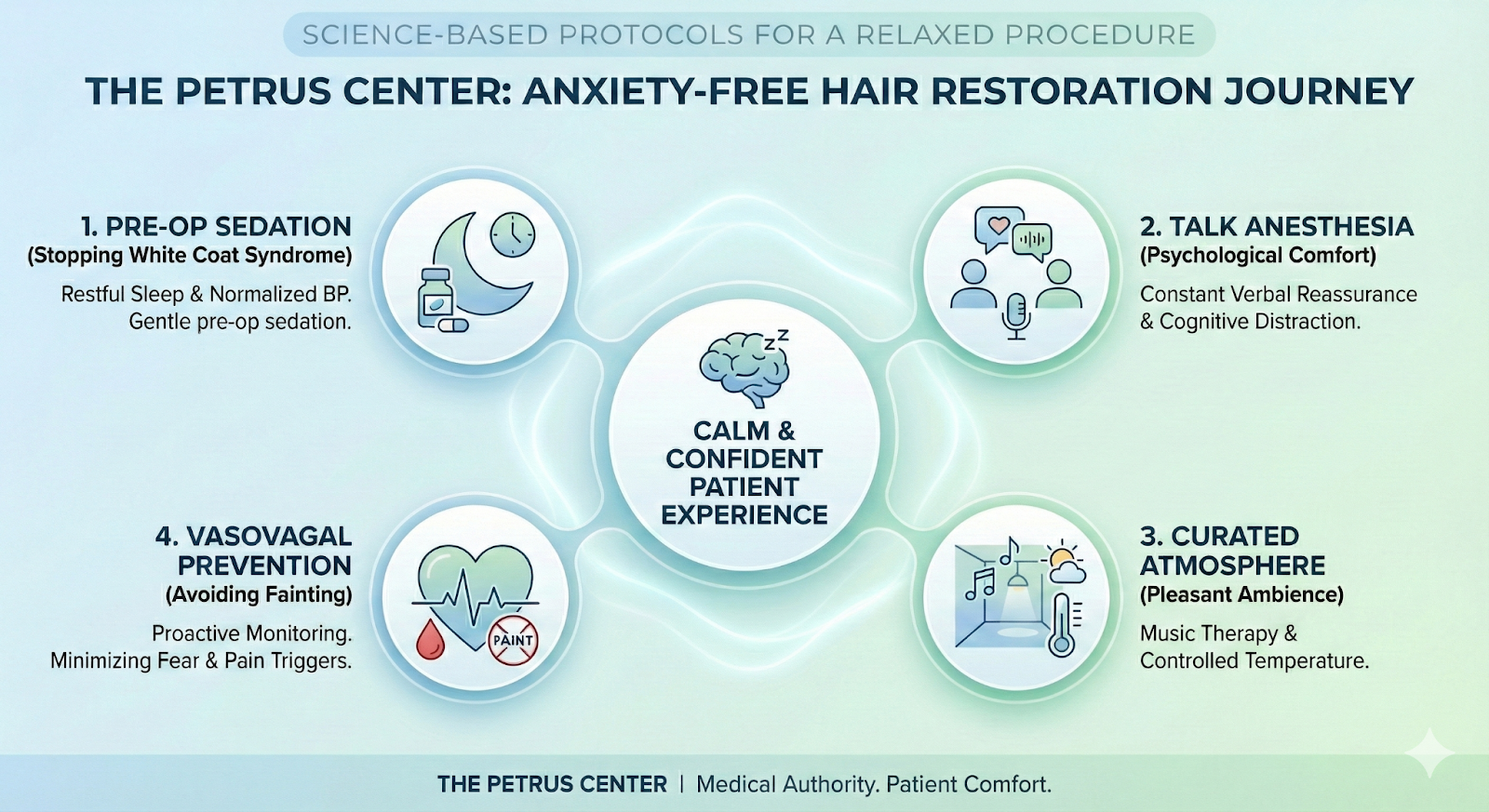
1. Stopping the "White Coat Syndrome" Before It Starts
It is very common for patients to experience "White Coat Hypertension"—a spike in blood pressure caused purely by the stress of being in a doctor's office. High blood pressure isn't just a number; it can actually increase bleeding during surgery, making the procedure more difficult.
To counter this, our preparation begins before you even arrive.
The Night Before: We often recommend patients get a good night’s sleep the night prior. If you are going to travel into town for your procedure, we will provide complimentary on-site accommodations near our facility so you can have a full night's sleep, which helps normalize your blood pressure by the time you wake up.
Good Night’s Sleep: We try to equip you with all of the information you need to understand what will happen on transplant day, giving you the ability to get a good night’s sleep.
Pre-Op Sedation: Adequate preoperative sedation is fundamental to our process. It raises your pain threshold, reduces anxiety, and helps induce mild amnesia so you don't hyper-focus on the procedure.
2. The Power of "Talk Anesthesia"
We utilize a technique formally recognized in medical literature as "Talk Anesthesia".
Pain and anxiety are psychological as well as physical. By maintaining a constant, engaging dialogue with you, we can effectively distract your brain from the procedure. Verbal reassurance and conversation act as a "cognitive distraction," preventing your mind from dwelling on the clinical details of the surgery.
3. Curating the Atmosphere
A hair transplant takes several hours, so the environment must be comfortable. We reject the cold, sterile feeling of a typical operating theater in favor of a pleasant ambience.
Music Therapy: We utilize music in the treatment room to minimize apprehension and create a soothing auditory background.
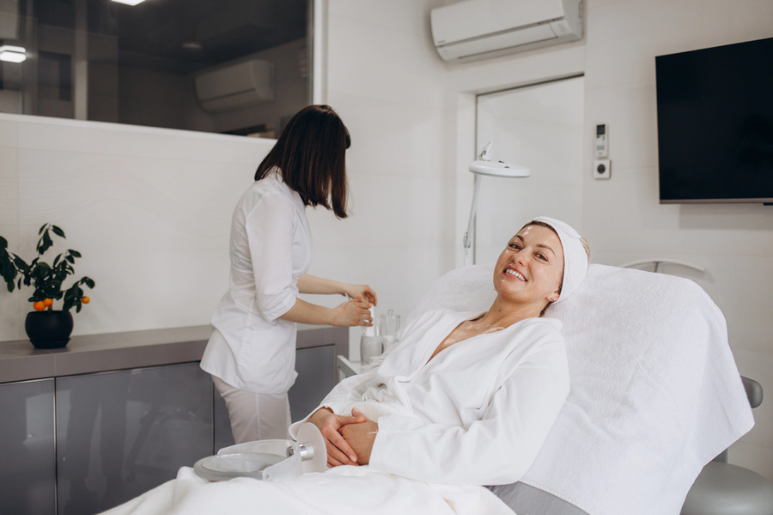
Comfortable Chair: Our procedure chairs are designed for comfort. We have pillows and blankets that help you feel comfortable and allow you to take a nap during the procedure if so inclined.
Dim Lights: The lights your private operating room dim and we often start off the day with the overhead lights off so that you can settle in and feel peaceful as we begin.
Temperature Control: We monitor the room environment to ensure you don't feel overheated or faint, which can be common triggers for anxiety.
4. Preventing "The Faint" (Vasovagal Response)
The most common emergency in hair restoration isn't a heart attack or an allergic reaction—it's simple fainting, known as vasovagal syncope. This is a reflex caused by the nervous system in response to fear, anxiety, or pain.
Because we know this reaction is often triggered by anxiety or the "sight of blood," we are vigilant in watching for early signs like sweating or pale skin. By aggressively managing your anxiety with the methods above (sedation, music, and conversation), we significantly lower the risk of these fainting episodes, ensuring a smooth and uninterrupted day.
5. Lunch and Snacks
A well-fed patient is a happy patient, which is why we provide complimentary lunch and snacks to keep your blood sugar and your spirits up. My staff also is always on the look out for ways we can provide everything you need, from a reading light to chargers for your phone. I specifically hire staff who have the “customer service” attitude of a luxury hotel.
6. The "Motivated Patient" Advantage
Interestingly, medical observations show that patients who are highly motivated to get their hair back generally have better pain thresholds and experience less anxiety. By focusing on your goal—a fuller head of hair—and letting us handle the anxiety management, you set yourself up for the best possible experience.
If you’re interested in hair transplantation and want to have the most calm and comfortable experience possible, I invite you to schedule a free consultation with me at the Hair Restoration Institute of Minnesota by clicking here.
Dr Gary Petrus is a double board-certified hair transplant surgeon.
